Prescriptive Analytics
Issue #28 | Sept 2

Hello !!
Welcome to the new edition of Business Analytics Review !
We hope you enjoyed our previous newsletter on Predictive Analytics.
Have a look at 105 Python codes on Data Visualization.
Today, we're delving into the world of prescriptive analytics, a powerful technique that leverages data to recommend specific actions and optimize decision-making. Prescriptive analytics goes beyond descriptive and predictive analytics by providing actionable insights. It uses advanced algorithms and machine learning models to analyze data and suggest the best course of action based on various constraints and objectives.
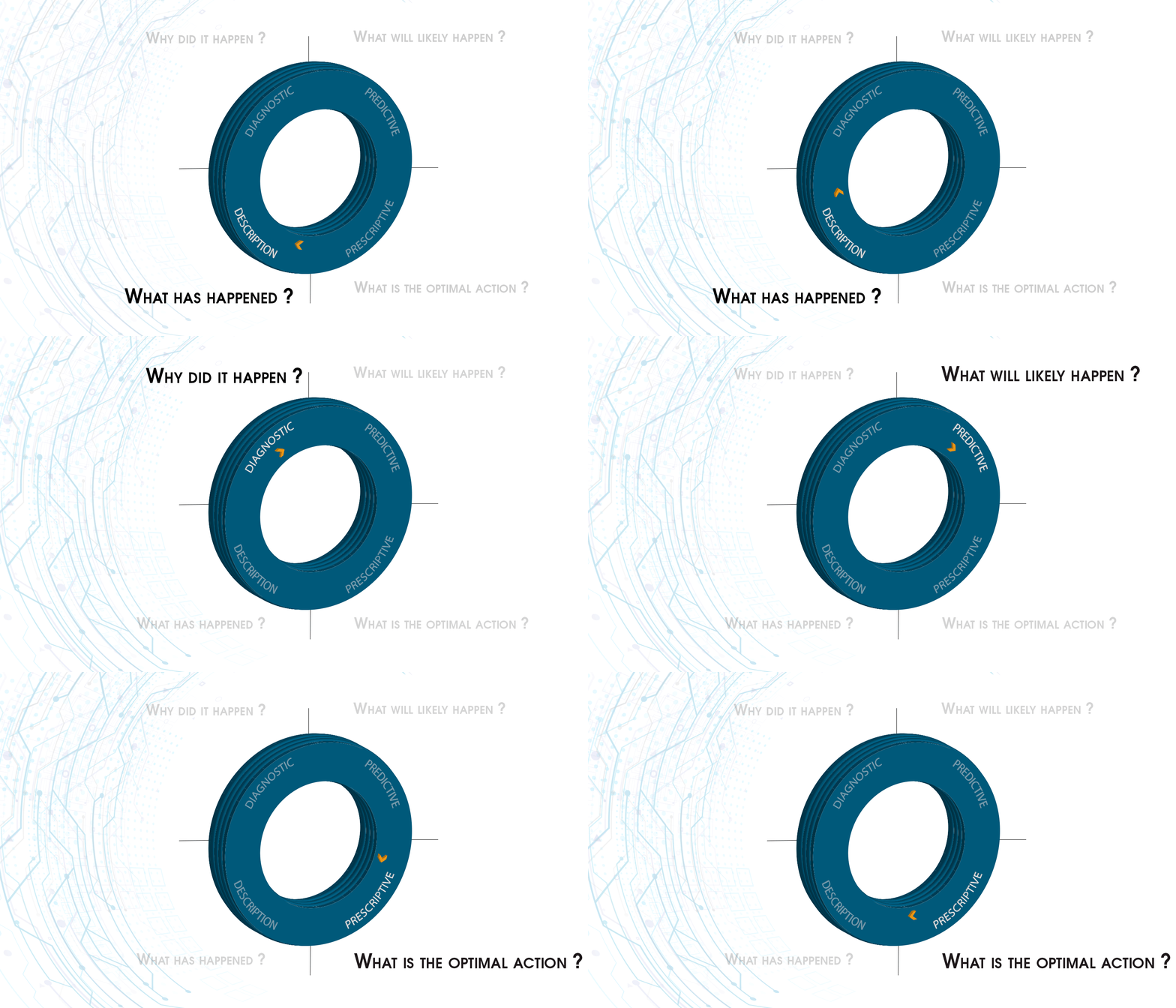
How Does Prescriptive Analytics Work?
Data Collection and Preparation: Gather relevant data from various sources and ensure its quality and consistency.
Predictive Modeling: Develop predictive models to forecast future outcomes based on historical data and patterns.
Optimization: Use optimization algorithms to identify the best course of action that maximizes desired outcomes while considering constraints and objectives.
Recommendation Generation: Based on the predictive models and optimization results, generate actionable recommendations.
Key Applications of Prescriptive Analytics:
Supply Chain Optimization: Optimize inventory levels, production schedules, and transportation routes to minimize costs and improve efficiency.
Personalized Marketing: Tailor marketing campaigns to individual customers based on their preferences and behavior.
Risk Management: Identify and mitigate potential risks by simulating various scenarios and evaluating their impact.
Financial Planning: Optimize investment portfolios and financial decisions based on market trends and risk tolerance.
Benefits of Prescriptive Analytics:
Improved Decision Quality: Make data-driven decisions that are more informed and effective.
Enhanced Efficiency: Optimize operations and resource allocation to maximize outcomes.
Risk Mitigation: Identify potential risks and proactively take steps to mitigate them.
Competitive Advantage: Gain a competitive edge by making data-driven decisions faster than your competitors.
Recommended Reads for Prescriptive Analytics:
How to Implement and What Is Prescriptive analytics?
Read More
Why The Future Of Data Analytics Is Prescriptive Analytics by Forbes:
Read More
Top 10 Companies in Prescriptive Analytics Market
Read More
In our last email we talked about Predictive Analytics. Please read here
Or search ‘businessanalytics@substack.com’ in your mailbox.
Trending in Business Analytics
AI Grammy CEO says music industry also has AI concerns. The rise of AI has consumed the arts, just as it has Silicon Valley. Everyone is pondering: Will AI replace me? And within music — what happens to copyright? Royalties? To the hard work I’ve put into my craft?
Read More
New Amazon Alexa to use Claude AI as Amazon's own AI struggled. The upcoming version of the Alexa voice assistant will use Claude AI from Anthropic, the startup Amazon invested $4 billion into last year.
Read More
Google is working on AI that can hear signs of sickness. Given everything you’ve already heard about AI, you may not be surprised to learn that Google is among other outfits beginning to use sound signals to predict early signs of disease.
Read More
Tool of the Day: rapidminer

RapidMiner is a comprehensive data science platform that enables users to analyze data, build machine learning models, and deploy predictive solutions. It offers a user-friendly interface with a visual workflow approach, making it accessible to both data scientists and business analysts . Key features of RapidMiner include:
Data preparation: Easily clean, transform, and prepare data for analysis.
Machine learning: Build and train various machine learning models, including regression, classification, and clustering.
Model deployment: Deploy models into production environments for real-world applications.
Collaboration: Facilitate collaboration among team members through shared workflows and version control.
Integration: Connect to various data sources and integrate with other tools in your data stack.
If you found this edition valuable, consider gracing us with a like .
We'd love to hear your two cents (or maybe a whole dollar if you really loved it!) in the comments below.
Subscribe & Stay Tuned for the next edition on “Time Series Analysis“