
Building Your First MCP Server in Minutes with Claude
Edition #264 | 11 March 2026

Hello!
Welcome to today’s edition of Business Analytics Review!
Hope this email finds you knee-deep in some fascinating code or pondering the next big model breakthrough—whichever floats your boat. Today, we’re diving into something that’s got everyone genuinely excited nowadays: building your first MCP server in minutes with Claude. If you’ve ever dreamed of turning your AI assistant into a seamless bridge between chatty models and real-world tools, buckle up. This isn’t just tech talk; it’s the kind of practical magic that can supercharge your workflows overnight.
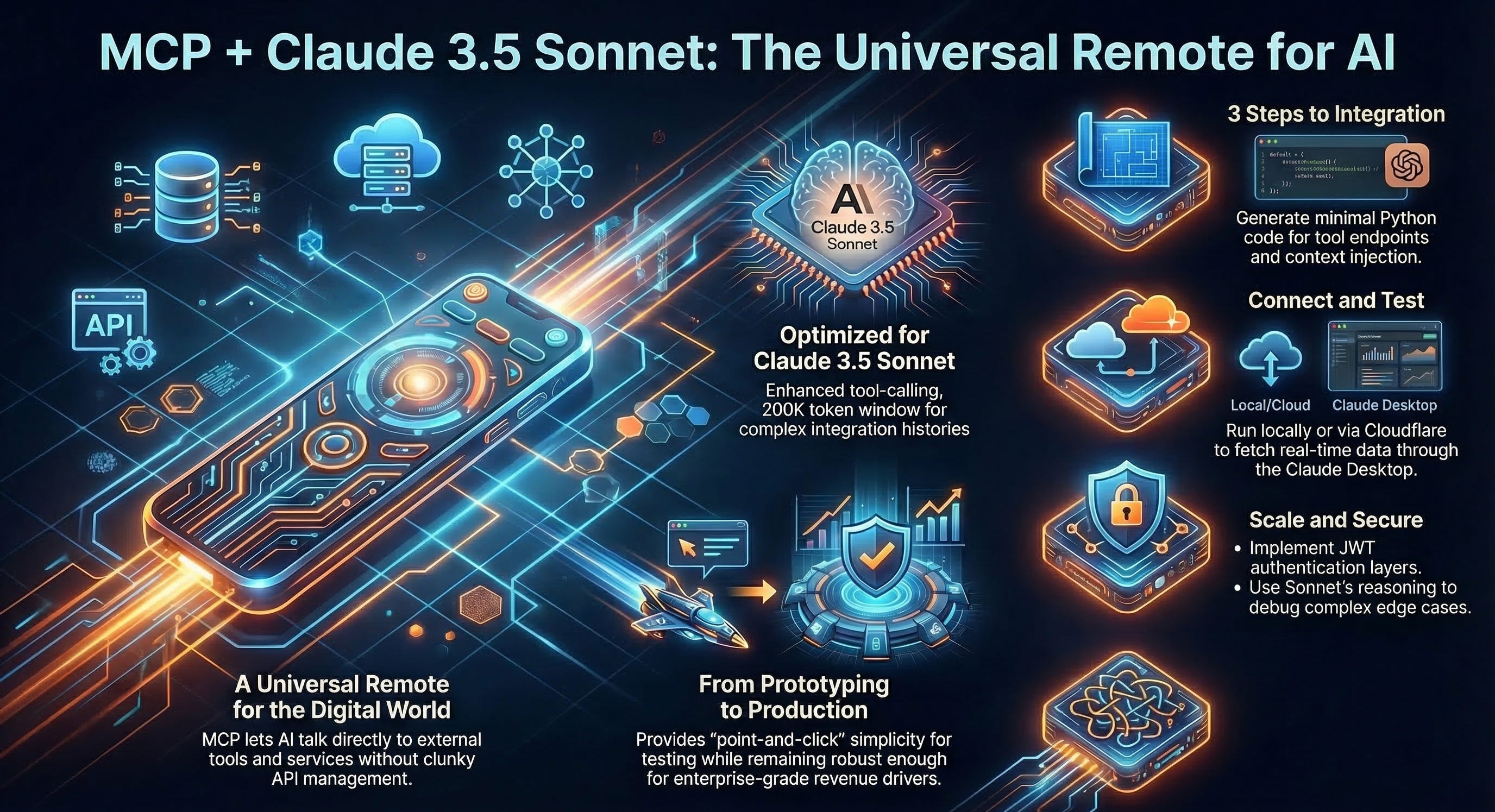
Why MCP Matters (And Why Claude 3.5 Sonnet is Your New Best Friend)
Picture this: You’re knee-deep in a project, and your AI sidekick—let’s say Claude—needs to pull data from a local database, tweak a spreadsheet, or even ping your smart home lights for that “eureka” moment vibe. Without the right setup, that’s a clunky mess of APIs and context-switching. Enter the Model Context Protocol (MCP), a lightweight standard dreamed up by the folks at Anthropic to let AI models like Claude talk directly to external tools and services. It’s like giving your LLM a universal remote for the digital world—secure, efficient, and ridiculously extensible.
What makes this now? Claude 3.5 Sonnet, Anthropic’s latest powerhouse (dropped mid-2024 and still turning heads in 2026), isn’t just smarter at reasoning or coding—it’s built with MCP in mind. Sonnet’s enhanced tool-calling smarts mean you can scaffold an entire MCP server with minimal boilerplate. No more wrestling with verbose configs or security headaches; it’s point-and-click simple for prototyping, yet robust enough for production.
Here’s the gist of how you can do it yourself—no PhD required:
Grab the Basics: Head to the MCP docs (modelcontextprotocol.io) and install the SDK via npm. Claude 3.5’s playground lets you test prompts right there.
Scaffold with Sonnet: Feed it a prompt like: “Write a minimal MCP server in Python that exposes a ‘get_weather’ tool.” Sonnet spits out clean, commented code; endpoints for context injection, tool invocation, and response streaming included.
Hook It Up: Run it locally (or deploy to Cloudflare Workers for free scaling), then connect via Claude Desktop. Test with a simple query: “What’s the weather like for my next meeting?” and watch it fetch real data without breaking a sweat.
Scale Smart: Add auth layers (JWTs are a breeze) and iterate—Sonnet excels at debugging edge cases, like handling malformed tool calls.
The beauty? This isn’t siloed academia; it’s business gold. Imagine sales teams using MCP-enabled Claude to auto-generate personalized pitches from CRM data, or analysts chaining ML models with live feeds for predictive insights. In my view, MCP democratizes AI integration, turning “nice-to-have” tools into revenue drivers. And with Sonnet’s 200K token context window, you can layer in complex histories without losing the plot.
If you’re building analytics pipelines, this is your cheat code—faster iterations mean quicker ROI on those ML investments.
Recommended Reads
Building My First MCP Server: Integrating AI with Local Tools Using Claude Desktop
A relatable walkthrough from a dev’s first rodeo, showing how to wire Claude to your local files—perfect for solo tinkerers. Check it outHi Claude, Build an MCP Server on Cloudflare Workers
Quick guide to deploying MCP globally with zero infra hassle—ideal if you’re eyeing scalable AI apps. Check it outClaude Desktop Extensions: One-Click MCP Server Installation
Inside scoop on Anthropic’s extension architecture for plug-and-play setups—great for streamlining team workflows. Check it out
Trending in AI and Data Science
Let’s catch up on some of the latest happenings in the world of AI and Data Science
How the OpenAI-Anthropic Feud Could Warp the Future of AI
The intensifying rivalry between OpenAI and Anthropic threatens to fragment AI development, stifling collaboration and innovation. It could lead to siloed research, higher costs, and distorted market dynamics, ultimately slowing global AI progress
Nvidia-backed Nscale valued at $14.6 billion in fresh funding round
UK AI firm Nscale, supported by Nvidia, secures $2 billion funding, boosting its valuation to $14.6 billion. The investment fuels massive data center expansion to power advanced AI training and inference workloadsWhy Vietnam’s landmark AI law is first major regulatory test for Southeast Asia
Vietnam’s pioneering AI legislation sets a regional precedent by balancing innovation with ethics, data privacy, and security. As Southeast Asia’s first comprehensive framework, it will influence neighbors’ approaches to governing rapid AI adoption
Tool of the Week: Composio

Wrapping up with a hot pick that’s buzzing in AI dev circles: Composio. It’s an open-source platform that supercharges AI agents (like Claude) by connecting them to 100+ tools and APIs—from GitHub to Slack—via managed integrations. No more custom MCP servers from scratch; just auth once and let your bots handle the rest. Learn More
Follow Us:
LinkedIn | X (formerly Twitter) | Facebook | Instagram
Please like this edition and put up your thoughts in the comments.
This is so cool I loved it
Great breakdown! MCPs are becoming essential for AI-driven business automation. The simplicity of building them with Claude opens up significant opportunities for startups to create custom AI integrations without heavy development overhead. This approach aligns perfectly with the broader trend of democratizing AI infrastructure. Looking forward to seeing more use cases in the finance and B2B SaaS sectors.